Shatavari: the cooling Ayurvedic root explained
Shatavari is Ayurveda’s classic nourishing herb for women, and a general tonic for men too. What it is, how it is used and what to check.
Written by
Girivana Editorial Team
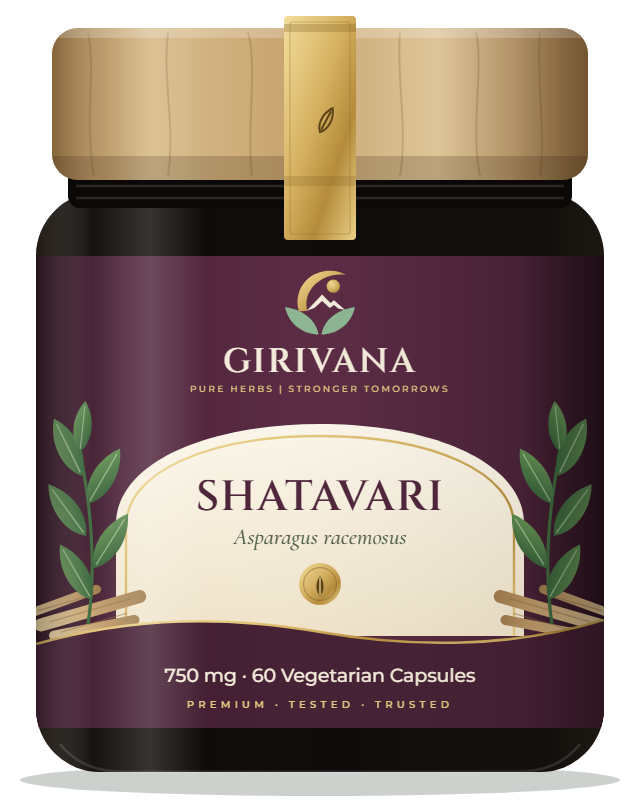
Shatavari (Asparagus racemosus) is one of the most valued herbs in Ayurveda. It is best known for its long tradition in women’s wellbeing, but it is also used as a general nourishing tonic. This guide explains what shatavari is and how it is traditionally used.
The plant
Shatavari is a climbing member of the asparagus family. It has fine, needle-like leaves, small white fragrant flowers and, below the ground, clusters of pale, finger-shaped tuberous roots. A single plant can carry dozens of them, which explains its Sanskrit name, often translated as “she who has a hundred roots”.
Shatavari in Ayurveda
Ayurvedic texts describe shatavari as sweet, bitter, heavy, unctuous and cooling. It is said to balance vata and pitta, the doshas of movement and heat.
It is classed as a rasayana, a rejuvenating herb taken regularly to support vitality. Within that group it is thought of as the nourishing, cooling counterpart to warming herbs such as ashwagandha.
Women’s wellbeing at every stage
Shatavari has been used across a woman’s life in Ayurvedic tradition: during the monthly cycle, after childbirth and in the years around menopause. Its cooling, nourishing character is the reason it is chosen at these times.
Because hormones and pregnancy are involved, it is especially important to take advice before using shatavari at these stages. See the caution section below.
Not only for women
Although it is best known as a women’s herb, Ayurveda also uses shatavari for men, as a general tonic and as part of rasayana formulations.
How shatavari is prepared
The tuberous roots are harvested, washed, peeled or cleaned, and shade-dried. Shade drying is traditional for many roots because strong sun can affect their quality. The dried roots are then milled into a fine, cream-coloured powder.
The powder has a mildly sweet, slightly bitter taste and is traditionally stirred into warm milk. Shatavari is also cooked into ghee (shatavari ghrita) in classical preparations.
Capsules or powder?
Capsules contain measured amounts of the same root powder and are the most convenient option for daily use. Powder is good if you prefer the traditional method of taking it in milk.
What to check on the label
- The botanical name, Asparagus racemosus.
- The part used: root or tuberous root.
- The amount per capsule in milligrams.
- Any other ingredients, fillers or colours.
- Independent testing for heavy metals and microbial limits.
Who should take care?
Talk to a doctor or registered Ayurvedic practitioner before using shatavari if you are pregnant, trying to conceive or breastfeeding, have a hormone-sensitive condition, take regular medication, or are allergic to asparagus.
In summary
Shatavari is a cooling, nourishing rasayana root, traditionally used for women’s wellbeing and as a general tonic. Take it consistently as directed, choose a clearly labelled product, and seek advice if any of the cautions apply to you.
Health supplement. Not for medicinal use. Not to exceed the recommended daily usage. This product is not intended to diagnose, treat, cure or prevent any disease. Consult your doctor before use if you are pregnant, nursing, taking medication or managing a medical condition. Read the label before use.
- shatavari
- women’s wellness
- rasayana
- herb guide
Girivana Editorial Team
Quality & product education
The team that sources, tests and documents every Girivana product, and explains what goes into each jar.