What is shilajit? The Ayurvedic resin explained
Shilajit is not a plant but a mineral-rich natural resin. What it is, why it must be purified, and how it is traditionally taken.
Written by
Girivana Editorial Team
Shilajit is one of the most unusual substances in Ayurveda. It is not a herb, a root or a fruit, but a dark, sticky resin that forms naturally in rock. This guide explains what shilajit is, why purification matters and how it is traditionally used.
Born of the rock
The Sanskrit name Shilajatu means “born of the rock”. Shilajit forms over a very long time as plant matter and minerals break down and are pressed within layers of rock. In warm weather the material seeps out of cracks as a thick, tar-like substance.
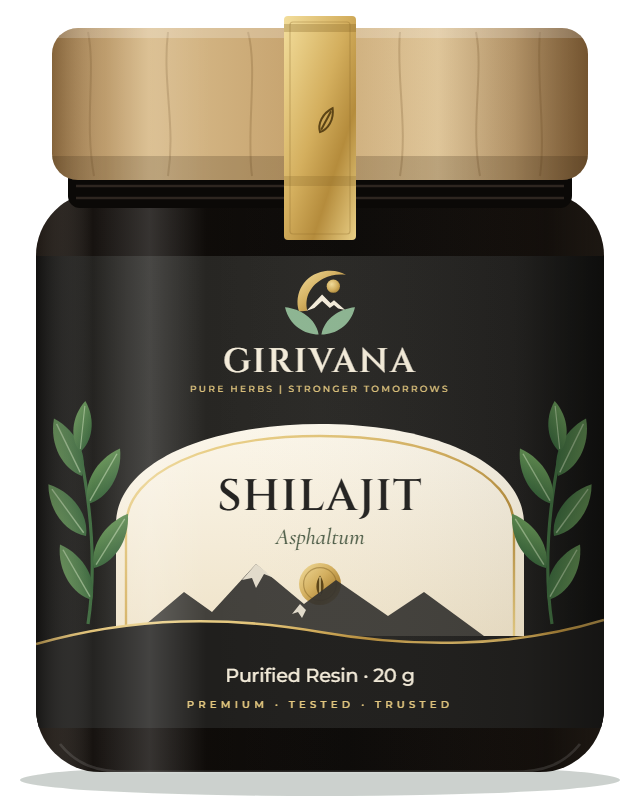
In its traditional form, purified shilajit is a glossy, dark brown to black resin. It is firm when cool, soft and sticky when warm, and dissolves in warm water.
Shilajit in Ayurvedic tradition
Classical Ayurvedic texts describe shilajit as a powerful rasayana, traditionally taken to support stamina, strength and vitality. It is also an ingredient in a number of classical formulations.
Why purification matters
Raw shilajit is never used as it is. Straight from the rock it contains soil, sand, plant debris and other impurities. Ayurveda prescribes a purification process called Shodhana before use.
The best-known method is Surya Tapi, which means “sun-heated”:
- The raw material is soaked and dissolved in water, sometimes in a herbal decoction.
- The liquid is filtered to remove insoluble material.
- The filtered liquid is left in shallow vessels in sunlight.
- As the water slowly evaporates, a layer of purified resin forms and is collected.
The process is slow and gentle and can take weeks. The result is called Shuddha Shilajit, meaning purified shilajit.
Resin, powder or capsule?
Shilajit is sold in several forms:
- Resin: the traditional form. It is easy to see and taste what you are getting.
- Powder: dried and ground resin, sometimes mixed with carriers.
- Capsules and tablets: often contain extracts with added ingredients.
Whatever the form, the label should state what the product contains and how much shilajit is in each serving.
How shilajit is traditionally taken
A small, pea-sized portion of resin (roughly 300 to 500 mg) is dissolved in a cup of warm water or warm milk and taken once a day, usually in the morning. Use a clean, dry spoon and avoid boiling liquids.
Testing is essential
Because shilajit forms in rock, it naturally contains minerals. That makes independent testing for heavy metals such as lead, arsenic, mercury and cadmium especially important. Ask the brand for its certificate of analysis.
Who should avoid it?
Shilajit is not for use during pregnancy or breastfeeding, or for children. Speak to a doctor first if you have gout or raised uric acid, a medical condition, or take regular medication.
In summary
Shilajit is a mineral-rich natural resin, purified by classical Shodhana before use and traditionally taken in small amounts as a rasayana. Choose purified resin from a brand that tests every product and tells you exactly what is in the jar.
Health supplement. Not for medicinal use. Not to exceed the recommended daily usage. This product is not intended to diagnose, treat, cure or prevent any disease. Consult your doctor before use if you are pregnant, nursing, taking medication or managing a medical condition. Read the label before use.
- shilajit
- rasayana
- resin
- shodhana
Girivana Editorial Team
Quality & product education
The team that sources, tests and documents every Girivana product, and explains what goes into each jar.