Heavy metals in herbal supplements: what you should know
Why heavy metals can occur in herbs, which ones are tested for, what the limits mean, and the questions to ask any brand.
Written by
Girivana Editorial Team
Heavy metals are one of the main quality concerns with any herbal product. This article explains where they come from, how they are measured and what you can do as a buyer.
Why can herbs contain heavy metals?
Plants take up minerals from the soil and water they grow in. Where soil or water contains heavy metals, whether naturally or from industry, traffic or farming, plants can absorb small amounts. Contamination can also occur during drying, milling or storage if equipment or conditions are poor.
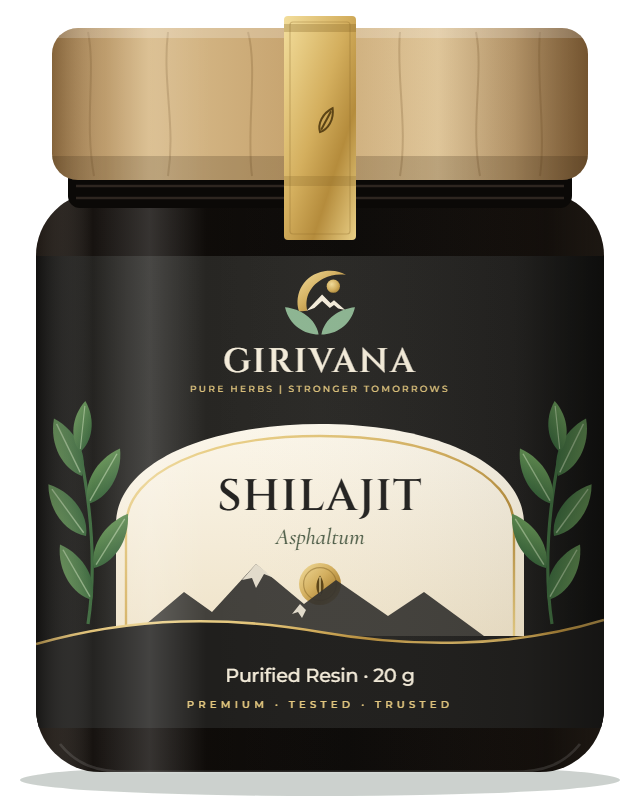
Mineral-based substances, such as shilajit, naturally contain minerals and need particularly careful testing.
Which metals are tested?
Four heavy metals are routinely tested in herbal products:
- Lead (Pb)
- Arsenic (As)
- Mercury (Hg)
- Cadmium (Cd)
How are they measured?
The most common method is ICP-MS (inductively coupled plasma mass spectrometry), which can detect metals at very low levels. Results are usually reported in parts per million (ppm) or milligrams per kilogram (mg/kg).
What do the limits mean?
Regulators and pharmacopoeias set maximum permitted levels for each metal in herbal products. A certificate of analysis will show the result for each metal next to the limit. A result “within limits” means the measured level is below the permitted maximum.
Some reports show “ND” (not detected) or “BLQ” (below the limit of quantification), which means the level was too low for the method to measure.
What good testing looks like
- Testing by an independent laboratory, not only in-house.
- A laboratory with recognised accreditation, such as NABL in India.
- Testing of the finished product, not only the raw material.
- A report that names the product, gives a date and links to what you bought.
Questions to ask any brand
- Do you test every product for heavy metals?
- Is the testing done by an independent, accredited laboratory?
- Can I see the certificate of analysis?
- What are the limits you test against?
A brand that is confident in its quality should be happy to answer.
Our approach
Every Girivana product is tested by an independent laboratory for heavy metals, microbial limits and pesticide residue before release. Contact our team if you would like to see a report.
- heavy metals
- lab testing
- quality
- certificate of analysis
Girivana Editorial Team
Quality & product education
The team that sources, tests and documents every Girivana product, and explains what goes into each jar.